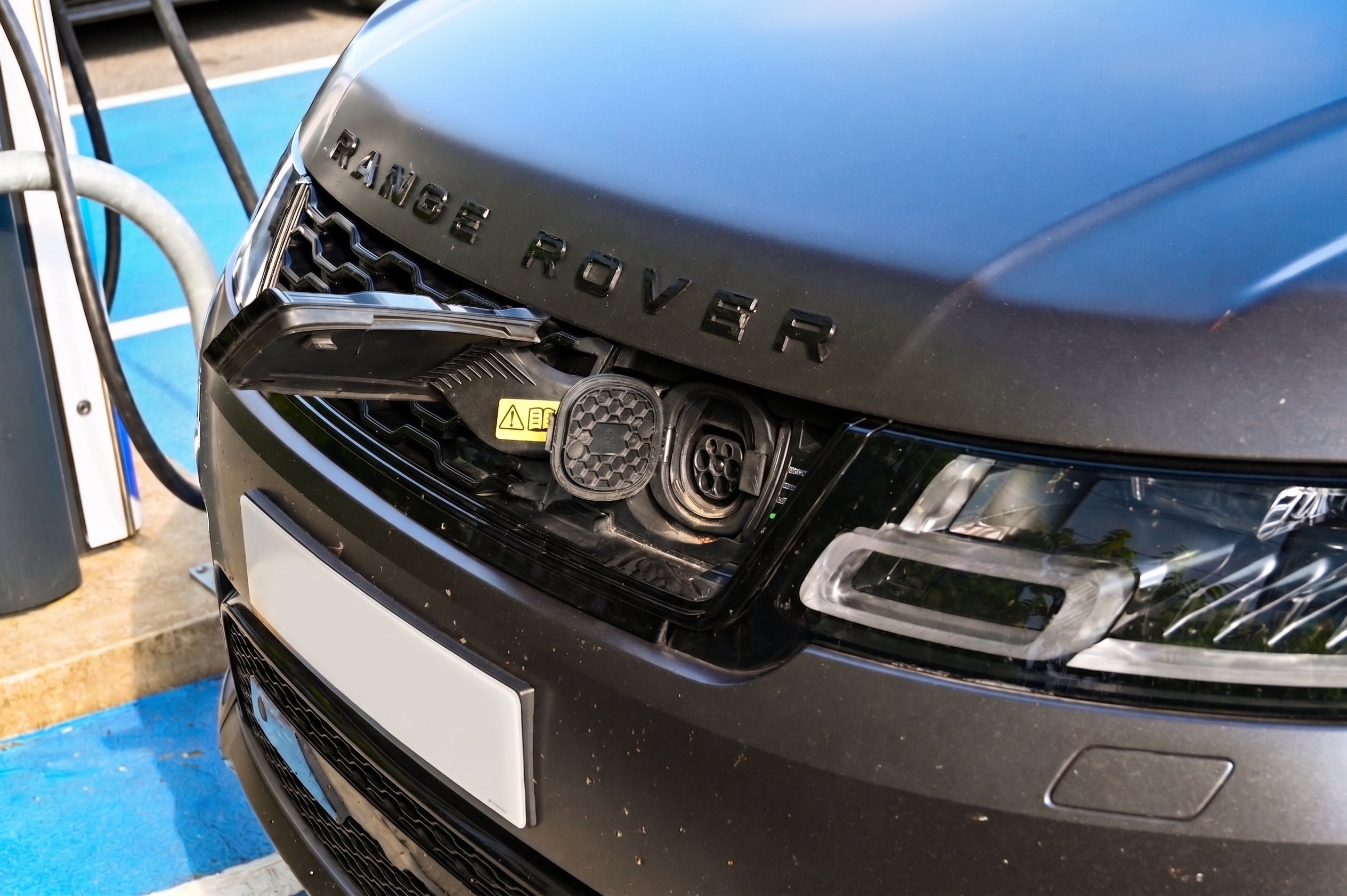
Land Rover Timing Chain Problems
You probably haven’t spent much time thinking about the timing chain inside your Land Rover. It sits deep within the engine, doing its job silently. Then one morning, a metallic rattle from under the bonnet catches your attention, fading within seconds as the engine settles into its rhythm.
Or maybe the rattle isn’t what you’ve noticed. Perhaps a warning light has appeared on the dashboard, or the engine feels rough at idle. Something has changed, and you’ve been putting off finding out what it means.
Those symptoms can have a number of causes, but on the 2.0 Ingenium diesel engine, timing chain system wear is one of the more frequently reported. It’s a known fault on this engine, and left unchecked, the situation gets progressively worse.
A cold-start rattle, engine management warning light, or rough running on a Land Rover fitted with the 2.0 Ingenium diesel engine points to timing chain system wear. The pins and moving parts within each link gradually lose material, increasing the chain’s effective length beyond what the tensioner can manage. Models commonly affected include the Discovery Sport, Evoque, Velar, and Defender.
Knowing what’s happening inside the engine puts you in a stronger position to decide what to do next. And if you’d rather speak with someone who works on these engines regularly, call Fitch Autos, Brownhills on 01543 452630.
The Timing Chain’s Job in Your Land Rover
The timing chain connects the crankshaft to the camshafts inside the engine. The crankshaft is driven by the pistons; the camshafts control when each valve opens and closes to let fuel in and exhaust gases out. The chain keeps these two synchronised, ensuring every valve operates at precisely the right point in the engine cycle.
When the timing chain system is working as designed, you’ll never know it’s there. The moment wear begins to develop, though, that precision starts to slip. And once valve timing becomes inaccurate, the consequences can escalate.
The Mechanics of Timing Chain Wear on the 2.0 Ingenium Diesel Engine
Timing chains don’t stretch. That’s a common misconception. What actually occurs is mechanical wear at the component level. Every link in the chain contains pins and small internal moving parts. Each time the engine completes a cycle, those parts rotate against each other under considerable load. Over the years, friction gradually removes material from the contact surfaces. The pins get fractionally smaller. The gaps between links widen fractionally. Across the entire chain, those tiny gaps accumulate, and the chain’s effective working length increases.
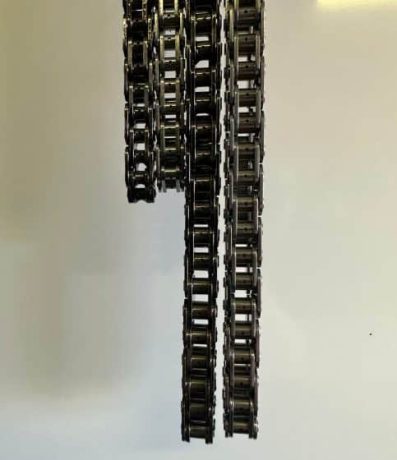
Timing chains removed from a 2.0 Ingenium diesel engine during repair. Wear within the chain links can increase the chain’s effective working length over time
The engine is built with a safeguard for this. A hydraulic tensioner, fed by engine oil pressure and an internal spring, pushes against the chain to keep it tight. During the early stages of wear, the tensioner absorbs the difference automatically. You won’t sense anything wrong.
But the tensioner doesn’t work in isolation. Guide rails support the chain as it travels through the engine, and they wear over time as well.
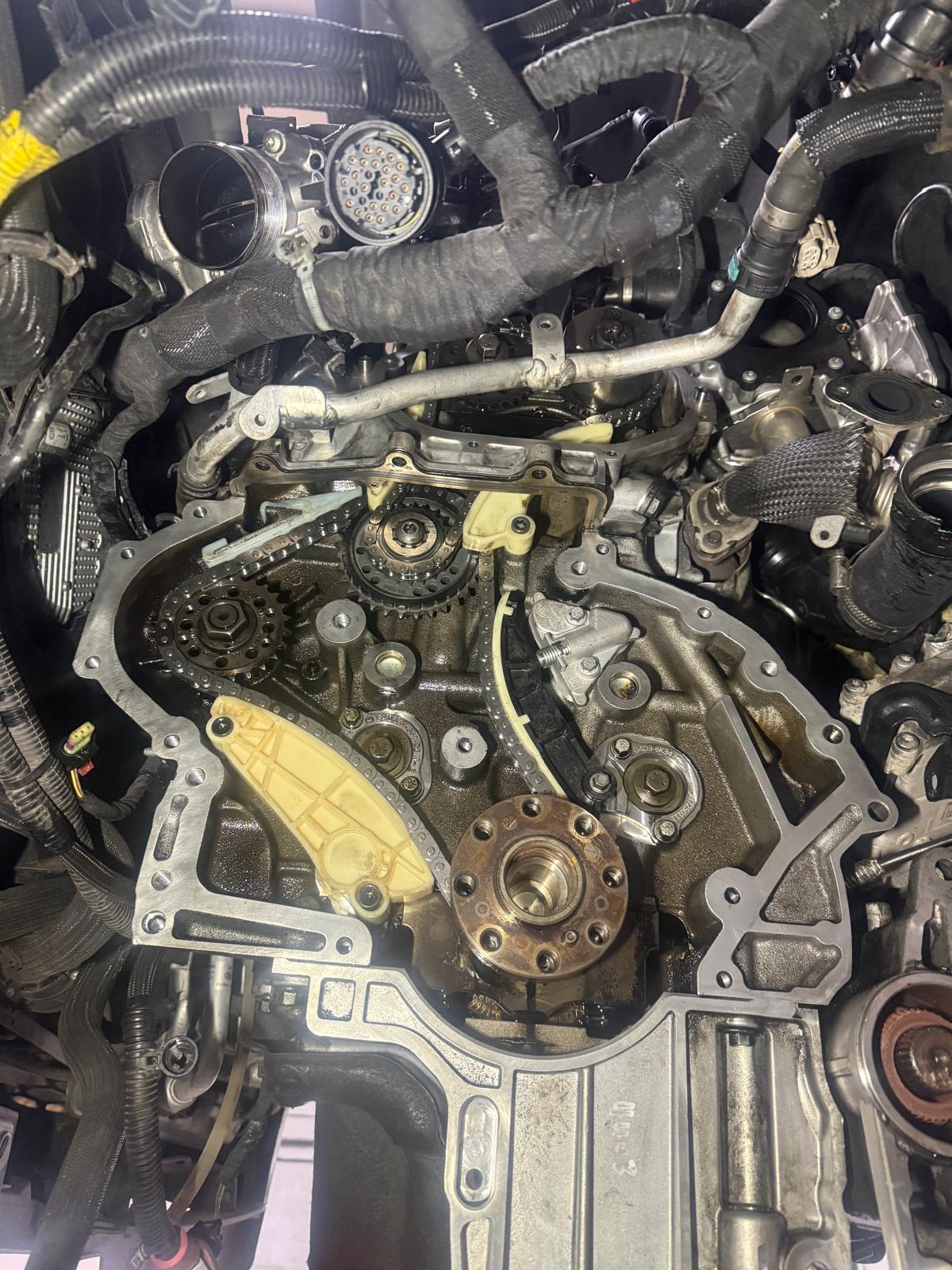
The timing chain system exposed on a Land Rover 2.0 Ingenium diesel engine, showing the chain, sprockets and guide rails
So what does that mean in practice? Once wear across the chain, tensioner, and guide rails combined exceeds the tensioner’s capacity, the slack can no longer be controlled. At that stage, symptoms appear. You might hear a Land Rover timing chain rattle when the engine is cold. The engine might run roughly. A warning light might come on.
The good news? Land Rover timing chain problems on the 2.0 Ingenium diesel engine are a recognised fault pattern. When the early signs are caught, a technical evaluation can establish which components need attention; the chain itself, the tensioner, the guide rails, or a combination.
If you’ve noticed any of these signs, contact Fitch Autos on 01543 452630 for a technical evaluation.
Cold-Start Rattle: What’s Happening Inside the Timing Chain
When your engine sits overnight, oil drains away from the upper components and back into the sump. That includes the oil that keeps the hydraulic tensioner pressurised. When you turn the key, the engine fires before full oil pressure has built up. For those first few seconds, the tensioner lacks the pressure to hold a worn chain taut. If the chain’s effective length has increased through wear, that brief low-pressure window is enough for the slack to produce an audible rattle.
As oil circulates and pressure builds, the tensioner regains its grip and the rattle fades. But the wear hasn’t reversed. The tensioner is compensating once pressure returns, not undoing the damage. Over time, the rattle is likely to last longer, sound louder, and become harder to dismiss.
If your Land Rover timing chain rattle has been getting worse, that’s a strong indication the system needs professional attention. Call Fitch Autos on 01543 452630 and we can talk you through the next step.
The Cost of Waiting: Why Land Rover Timing Chain Problems Escalate
The rattle clears once the engine warms. The warning light hasn’t returned in days. It’s tempting to push it down the list.
But here’s the reality.
Land Rover timing chain problems don’t stand still. Every symptom you’re noticing is evidence of wear that continues to develop. As more material is lost and the chain’s effective length increases, the excess slack accumulates. Beyond a certain threshold, the chain can skip over a sprocket tooth. The moment that occurs, the engine’s valve timing falls out of correct alignment.
This is especially critical on the 2.0 Ingenium diesel because it’s an interference engine. The pistons and valves occupy the same physical space inside the cylinder, separated only by precise timing. If the chain jumps and that timing is lost, there’s nothing preventing the pistons and valves from colliding. That impact can bend valves, gouge piston crowns, and in the most severe cases cause internal engine damage beyond economic repair.
And that’s not even the worst part. If the chain has already jumped and caused internal damage, the repair expands well beyond a Land Rover timing chain replacement. You could be looking at cylinder head work, or in the most severe scenarios, a complete engine swap. Acting on the early signs is what prevents that outcome.
If you’ve been noticing a Land Rover timing chain rattle or any of the other warning signs, now is the time to act. Call Fitch Autos, Brownhills on 01543 452630 and we can assess your timing chain system.
Timing Chain Assessment and Replacement at Fitch Autos
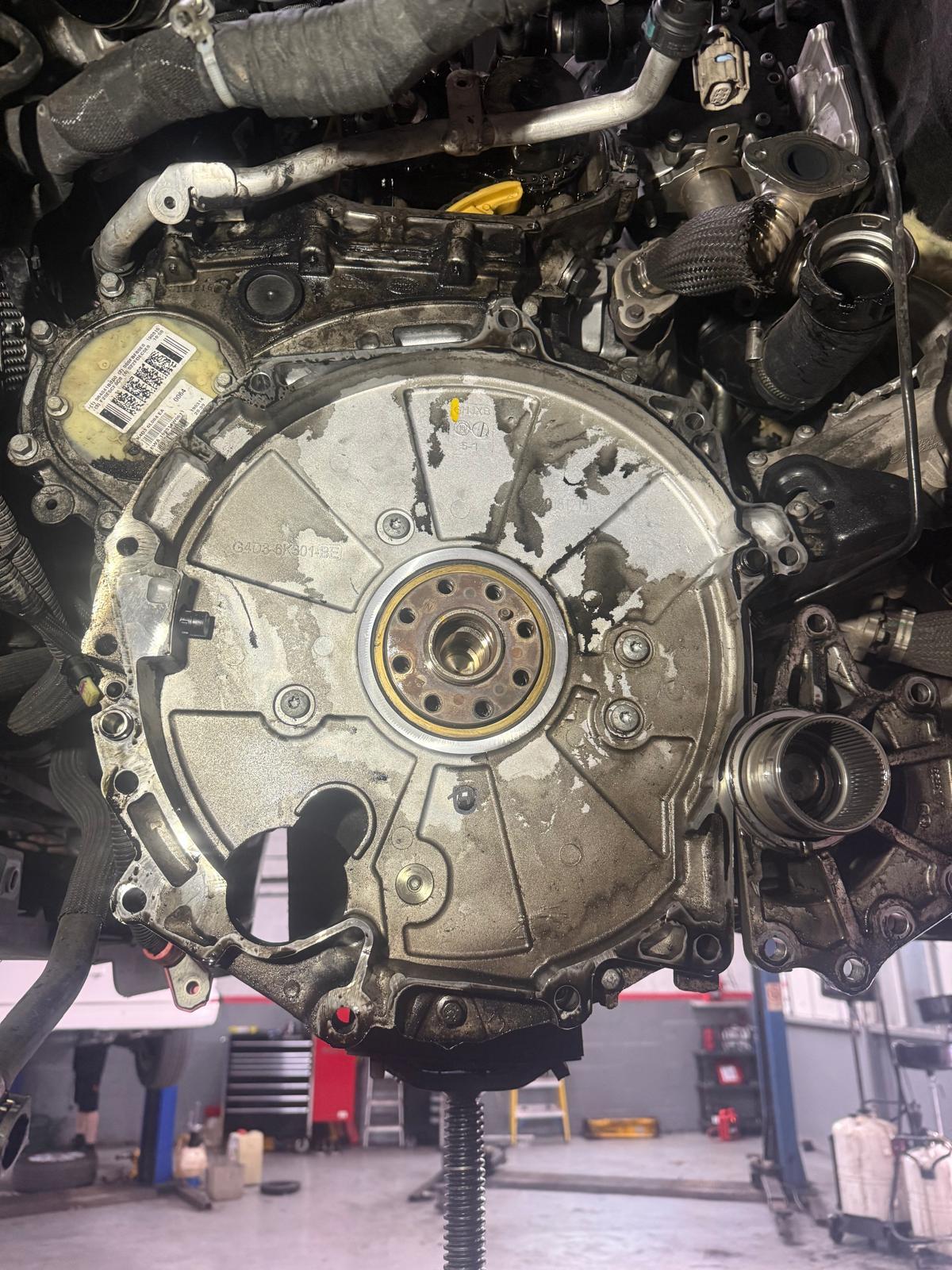
Accessing the timing chain system on the 2.0 Ingenium diesel is a substantial job requiring specialist knowledge, tooling and careful disassembly
When you bring your Land Rover to Fitch Autos, we start by understanding what you’ve experienced and how the symptoms have developed. Our technicians then carry out a thorough technical evaluation using their experience with the 2.0 Ingenium diesel engine and manufacturer-level software to establish the condition of the timing chain system. We’ll explain what we find and provide a detailed quote before any work begins.
A Land Rover timing chain replacement on this engine is a substantial piece of work requiring specialist knowledge of the JLR platform and the correct tooling throughout. The work typically covers the chain, tensioner, guide rails, sprockets, and associated components. After installation, valve timing is set to manufacturer standards and the system is verified. When carried out at the right time by technicians who understand this engine, it addresses the wear and helps protect against further damage.
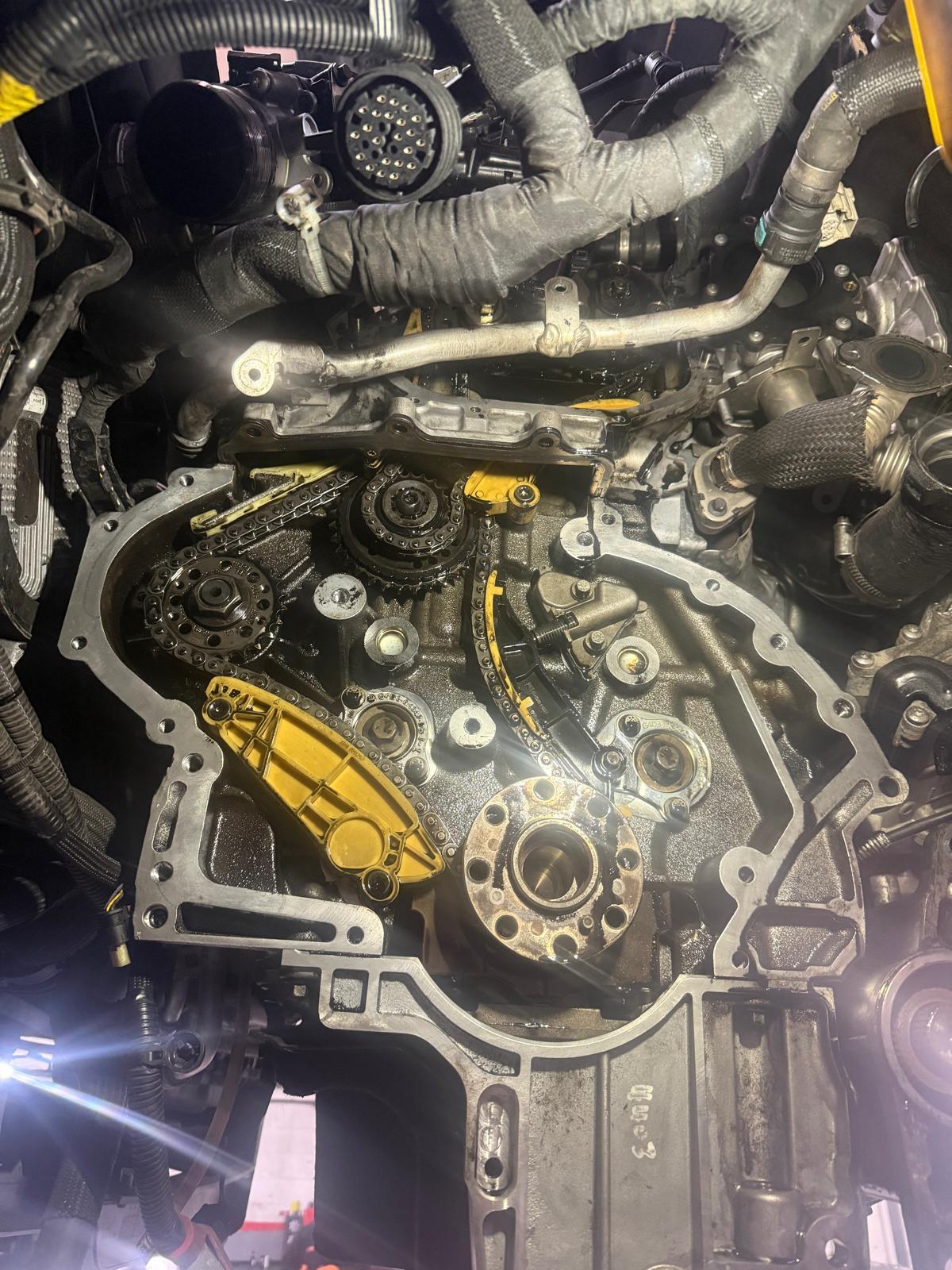
A 2.0 Ingenium diesel timing chain system during repair at Fitch Autos, with the chains, guides and sprockets visible
If you’d like your Land Rover’s timing chain system assessed, give Fitch Autos a call on 01543 452630. We’ll explain what to expect from start to finish.
2.0 Ingenium Diesel Engine: Which Land Rover Models Are Prone to Timing Chain Wear?
Timing chain wear can happen in any engine with a chain-driven valve timing system. But across the Land Rover range, the 2.0 Ingenium diesel is where the fault pattern shows up most regularly.
The models our technicians see most frequently with timing chain system wear include:
- Discovery Sport (2016 onwards)
- Range Rover Evoque (2016 onwards)
- Range Rover Velar (2017 onwards)
- Defender (2020 onwards)
All of these share the same 2.0 Ingenium diesel engine. The Land Rover Discovery Sport timing chain system uses identical components to the Velar or Defender; the chain, tensioner, and guide rails are common to the engine, not the vehicle body it sits in.
If your Land Rover shows a cold-start rattle, a warning light, or rough running, the advice is the same regardless of model: have it assessed before wear has a chance to progress. We serve Brownhills, Walsall, Cannock, and the surrounding areas.
Not sure which engine your Land Rover has? Ring Fitch Autos on 01543 452630 and we can confirm whether a technical evaluation is worthwhile.
Why Choose Fitch Autos for Your Land Rover Timing Chain Replacement?
The 2.0 Ingenium diesel engine requires experienced technicians, the right software, and the correct tooling. Fitch Autos, Brownhills has all three.
Our technicians combine hands-on experience with the JLR platform alongside manufacturer-level software and Land Rover technical resources to identify and address Land Rover timing chain problems with accuracy and thoroughness. When you choose Fitch Autos, you get:
- Technicians experienced with the 2.0 Ingenium diesel engine, supported by dealer-level software and access to Land Rover technical documentation
- A 12-month parts and labour warranty on all work carried out
- A courtesy car so you’re not left without transport while your Land Rover is with us
- Main-dealer standard work at great value
Join the {{review-count}} customers who’ve rated us {{average-rating}} stars on Google for expertise and value.
Call 01543 452630 today to book your technical evaluation.
Land Rover Timing Chain Wear: Common Questions Answered
Why does my Land Rover rattle on startup?
When the engine sits overnight, oil drains from the hydraulic tensioner. On startup, before oil pressure builds fully, a worn chain can rattle audibly. The noise fades once pressure returns, but the wear hasn’t reversed. A warning light or rough idle can also point to timing chain wear. Since other faults can produce similar symptoms, a technical evaluation at Fitch Autos is the most effective way to confirm the cause.
Can I keep driving with a timing chain issue?
We’d strongly recommend getting it assessed without delay. The 2.0 Ingenium diesel is an interference engine, which means the risk of internal engine damage is genuine if the timing chain system wear continues to advance. The sooner you bring your Land Rover in, the better your chances of keeping the repair scope contained. Ring Fitch Autos on 01543 452630 and we can arrange an evaluation.
How much does a Land Rover timing chain replacement cost?
The final figure varies by model and by the extent of wear discovered during assessment. A Land Rover Discovery Sport timing chain replacement may differ in scope from a Velar or Defender, even though the engine is the same. At Fitch Autos, we provide a fully itemised quote before we begin so you know exactly what’s involved. Ring Fitch Autos on 01543 452630 and we’ll talk you through the likely scope for your Land Rover.
Is this a major repair?
Yes. A timing chain replacement on this engine is a significant piece of work requiring specialist knowledge of the JLR platform and the correct tooling at every stage. Your Land Rover will typically be with us for more than a single day. Call Fitch Autos on 01543 452630 and we’ll give you an honest picture of the work and timeframe involved.