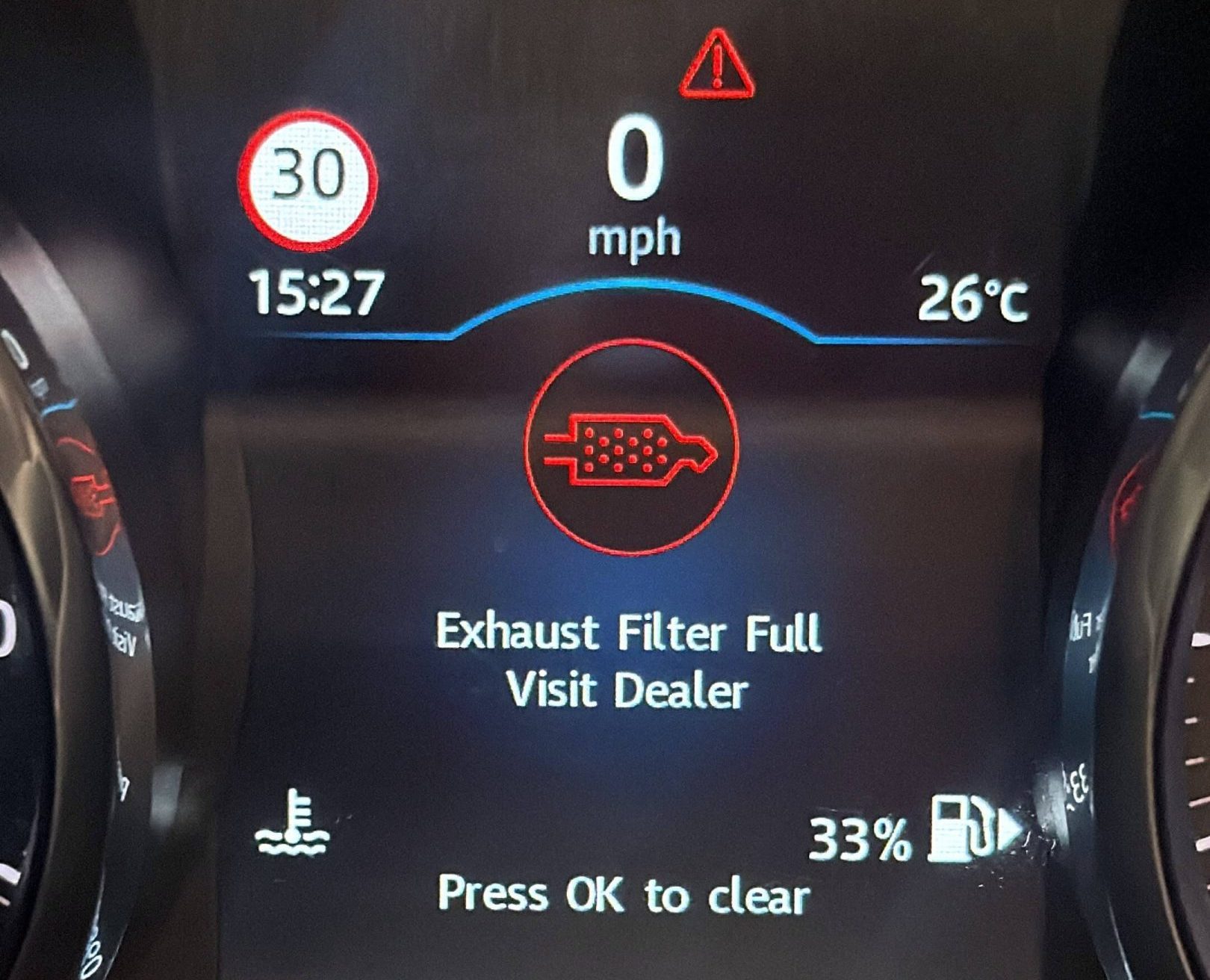
P2884 00 Fault
“It charges up, drives perfectly on electric, but the second the battery charge gets low the engine just won’t come on.”
When Mrs K contacted Fitch Autos, Brownhills, she was concerned about her 2018 Audi A3 e-tron. The vehicle had been running as expected in electric mode following an overnight charge, but once the battery charge dropped to the point where the combustion engine should have stepped in, the engine refused to start. For a plug-in hybrid that depends on both its electric drive system and combustion engine to operate normally, having no access to the combustion engine left the car restricted to shorter trips within its battery range.
This type of hybrid engine problem has a way of catching owners off guard. While battery charge remains, the vehicle drives without any sign of trouble. The fault only becomes clear when the system tries to start the combustion engine and nothing happens. Without an understanding of what’s going on, it’s difficult to gauge the seriousness of the problem or whether it’s safe to continue using the vehicle.
Mrs K booked her Audi A3 e-tron in for a technical evaluation with the specialists at Fitch Autos, so our technicians could examine the fault in detail, track down the cause, and return the vehicle to full hybrid operation.
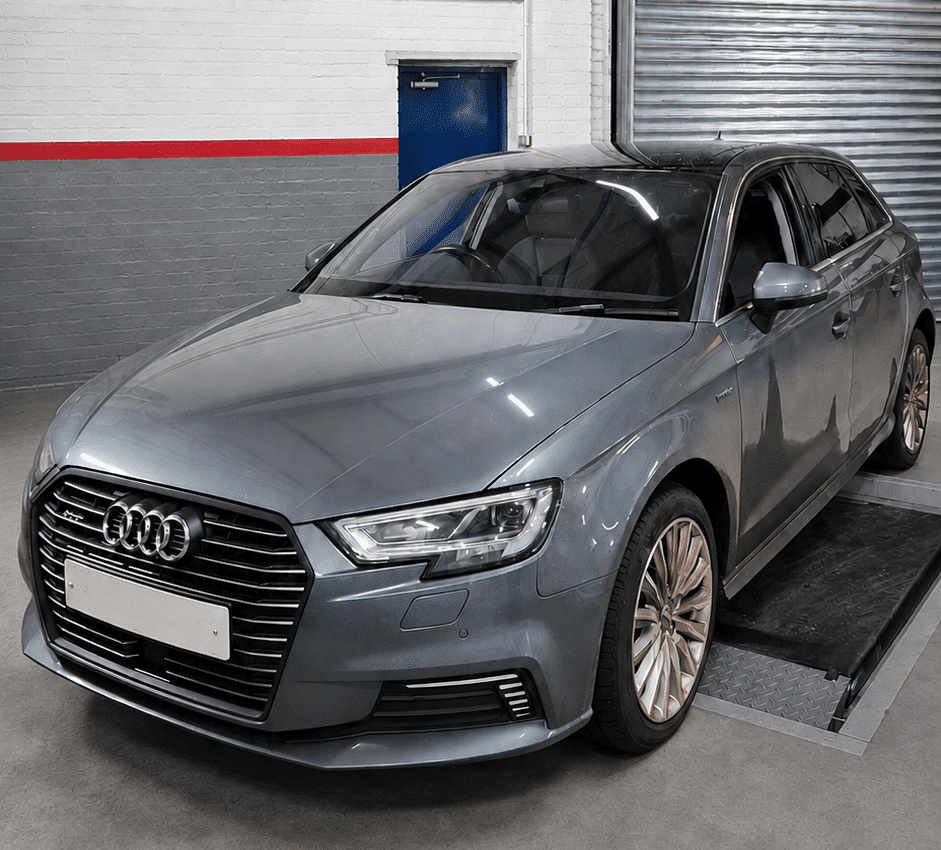
Our Initial Evaluation of the Audi A3 e-tron
Before any hands-on testing began, our team spoke with Mrs K to get a thorough understanding of how the fault had been presenting. The car had been driving normally on electric power after a full overnight charge, but once the battery charge fell to the level where the combustion engine was expected to take over, it wouldn’t come on. No warning lights or other symptoms had appeared while the vehicle was running in electric mode.
To confirm the fault under real driving conditions, our technicians charged the EV battery and completed a road test. The vehicle was driven until the battery charge had dropped far enough for the system to request combustion engine support. Exactly as Mrs K had reported, the combustion engine did not start and the car carried on under electric power alone.
Once the fault was confirmed, our technicians connected manufacturer-level diagnostic software and ran a full system scan. One fault code was recorded in the transmission control module:
- P2884 00 — Engine disconnect clutch stuck open. The code was logged as passive/sporadic.
This fault code pointed to a problem with the engine disconnect clutch within the transmission, the component that connects the combustion engine to the drivetrain when hybrid operation is needed. The passive/sporadic classification was in keeping with the vehicle’s usage. Because the car was regularly driven with enough battery charge to avoid needing the combustion engine, the fault wasn’t triggered on every trip. That said, Mrs K confirmed the problem showed up without fail each time the battery charge dropped to the point where engine support was called for.
With the code confirming the clutch was stuck in the open position, this became the clear focus for the next phase of the investigation.
Our technicians also examined the serial data stored in the transmission control module, checking for any other irregularities. No further fault codes were recorded, and no secondary concerns were present. This was an important finding, as it established that the issue was confined to a single fault rather than part of a wider transmission problem.
The P2884 00 fault code, combined with the serial data, gave our team a firm basis to work from. The next priority was to identify what was behind the hybrid engine problem. Our technicians proceeded to a more in-depth investigation.
What Was Causing the Engine Disconnect Clutch to Fail?
With the fault code centred on the engine disconnect clutch, our technicians carried out a structured inspection to determine what was preventing the clutch from functioning as it should.
Step 1: Consulting manufacturer technical data
Our technicians consulted the manufacturer’s technical information service to research the P2884 00 fault code in the context of the Audi A3 e-tron’s transmission.
The A3 e-tron is equipped with a dual-clutch transmission developed specifically for plug-in hybrid use. Three clutches are housed within this transmission. Two of them are responsible for gear changes. The third, the engine disconnect clutch, serves a separate purpose. It sits between the electric motor and the combustion engine, and its function is to connect or separate the two power sources depending on what the driving mode demands.
In pure electric mode, the engine disconnect clutch is held open, keeping the combustion engine separated so the electric motor alone can power the vehicle. When the battery charge drops or the system calls for greater power, the clutch closes to bring the combustion engine into operation. If the engine disconnect clutch cannot close, the combustion engine is left unable to operate.
The mechatronic unit is responsible for hydraulically controlling the engine disconnect clutch. It governs all electronic and hydraulic functions within the transmission. A pressure-regulating valve housed inside the mechatronic unit manages the hydraulic pressure required to engage and disengage the clutch.
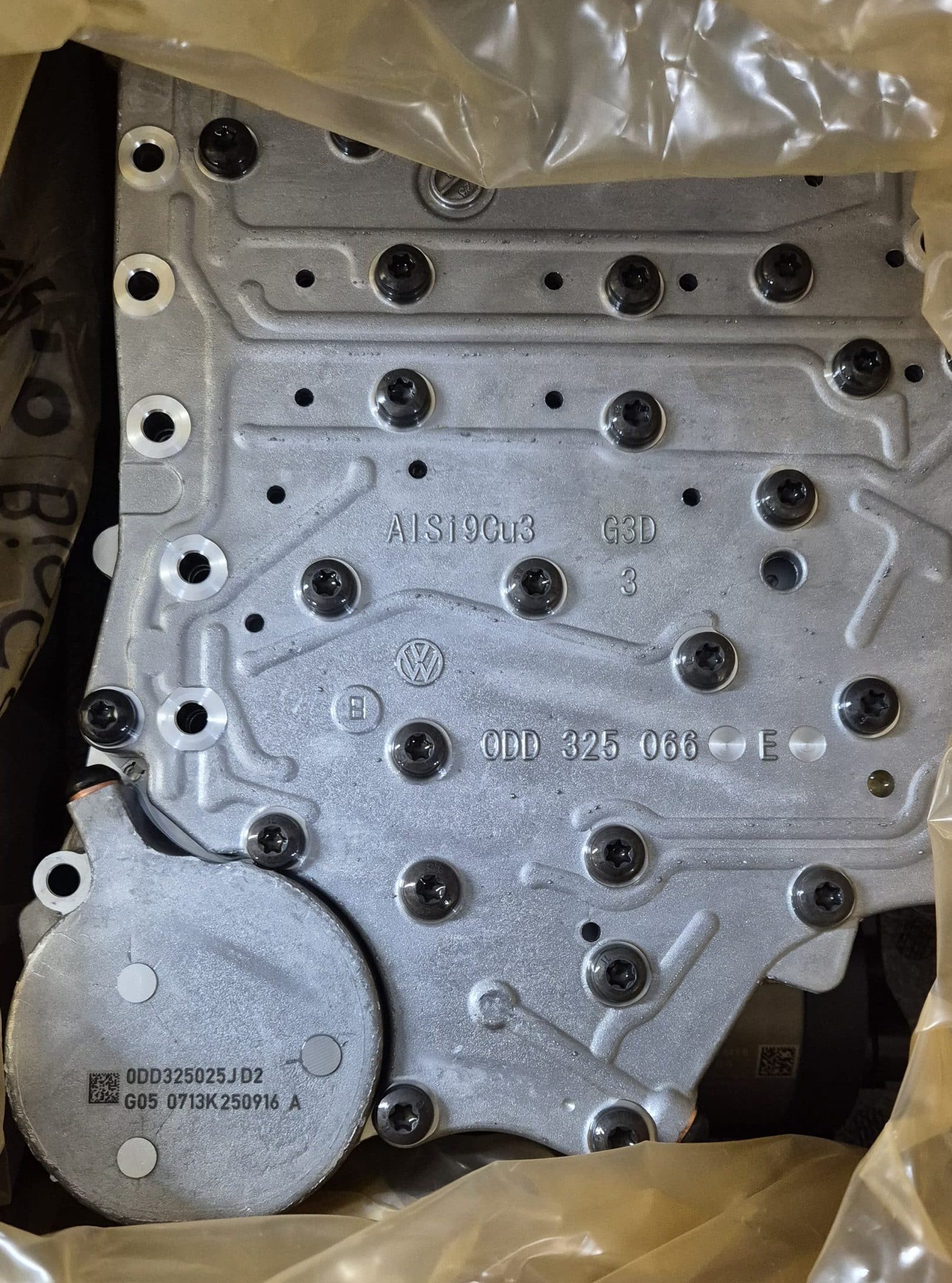
The replacement mechatronic unit for the Audi A3 e-tron’s hybrid transmission
Step 2: Checking TSBs (Technical Service Bulletins)
Our technicians searched the manufacturer’s TSB database for any documented issues relating to the P2884 00 fault on this transmission type. A TSB was found, issued by the manufacturer, which confirmed this as a known fault.
The bulletin identified the cause as a faulty pressure-regulating valve within the mechatronic unit. The manufacturer’s guidance was clear: where P2884 00 is the only fault code stored in the transmission control module, the mechatronic unit should be replaced.
This was in direct agreement with the outcome of our initial evaluation, where P2884 00 had been confirmed as the sole fault code with no additional transmission faults stored.
Step 3: Visual inspection and electrical checks
Before committing to the mechatronic unit replacement, our technicians completed a visual inspection of the transmission area and performed basic electrical checks on the associated wiring and connectors. This step was essential to rule out any external factors, such as damaged wiring or a poor connection, that might create similar symptoms.
No external issues were discovered. The wiring and connectors were intact and in good condition, with no evidence of damage or contamination found.
The conclusion
With the fault code verified, the TSB matched to both the reported symptom and the stored code, and external causes ruled out through physical inspection and electrical testing, our technicians were confident in the root cause. A faulty pressure-regulating valve inside the mechatronic unit was preventing the engine disconnect clutch from closing, leaving the combustion engine unable to engage.
The mechatronic unit needed to be replaced, in line with the manufacturer’s recommendation.
How Was the Faulty Mechatronic Unit Replaced?
Our team spoke with Mrs K to explain the findings, including the P2884 00 fault code, the matching TSB, and the confirmed root cause. With a clear repair path agreed, Mrs K approved the mechatronic unit replacement, and the work began.
Mechatronic unit replacement
- The transmission oil was drained, and the oil pan along with its associated components was removed to reach the mechatronic unit.
- The faulty mechatronic unit was carefully disconnected and removed from the transmission.
- A new, updated mechatronic unit was installed, with all electrical connections, mounting points, and seals checked to confirm correct fitment.
- Fresh transmission oil was added to Audi’s specification.
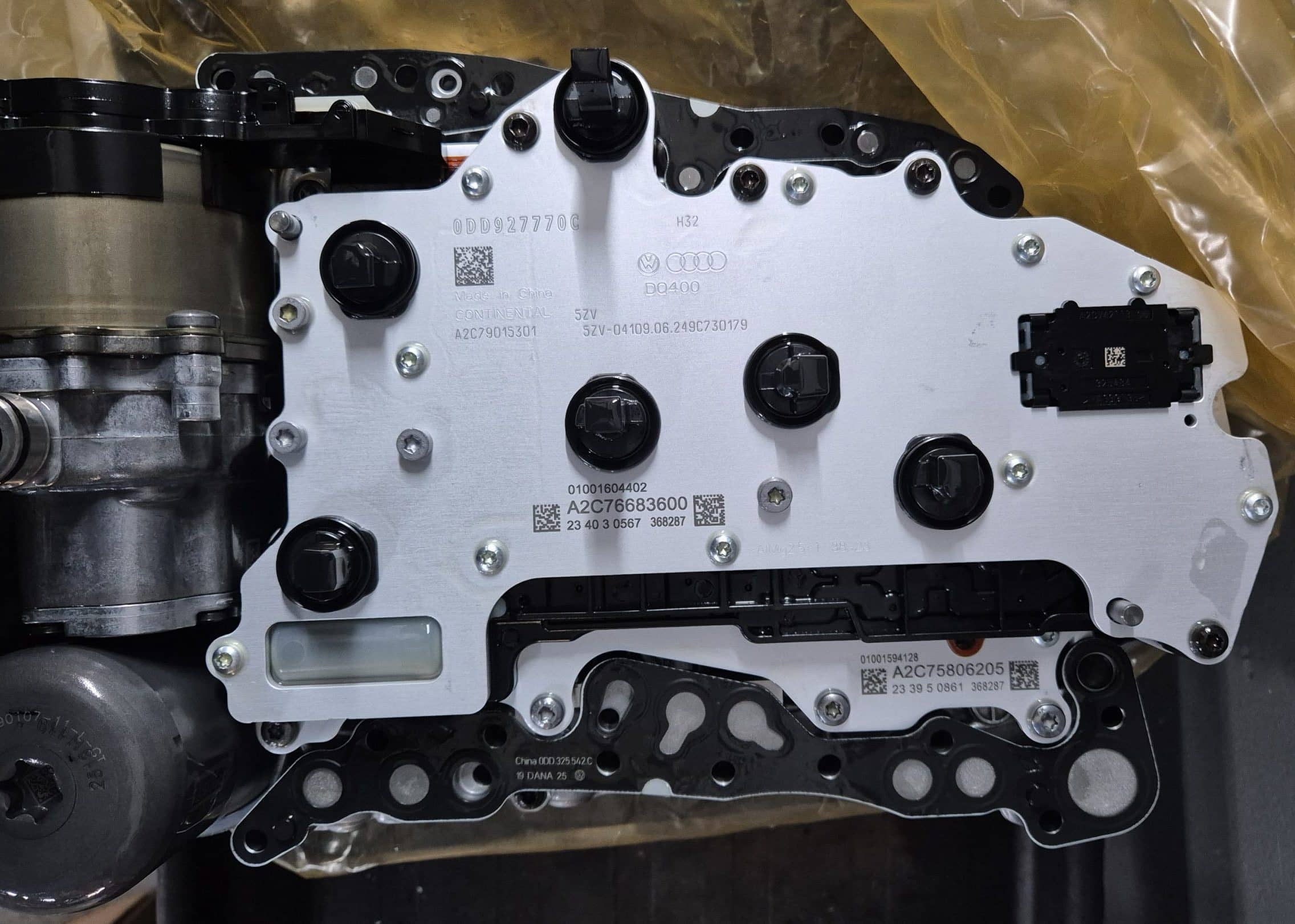
The replacement mechatronic assembly fitted as part of the Audi A3 e-tron repair
Calibration and adaptation
- Dealer-level software was used to run the required basic settings and clutch adaptation procedures following replacement. This allows the transmission control module to relearn the operating parameters for the clutch and hydraulic systems within the transmission.
- Stored fault codes were cleared.
Post-repair road test
A structured road test followed the repair. The vehicle was driven until the hybrid system requested combustion engine assistance, and the engine engaged correctly. No fault codes returned.
The Difference After the Mechatronic Unit Replacement
Mrs K’s Audi A3 e-tron left Fitch Autos, Brownhills with full hybrid operation restored. The combustion engine was engaging correctly when called upon, and the transition between electric and engine power was taking place as it should. The P2884 00 fault code had been resolved, and the vehicle was once again working as a plug-in hybrid is designed to.
By choosing Fitch Autos, Mrs K benefited from an accurate, evidence-led Audi hybrid car repair that pinpointed a documented manufacturer fault, confirmed it against a matching TSB, and delivered the mechatronic unit replacement in a single visit.
A complimentary courtesy vehicle was provided while the work was carried out, and the repair was completed at a more cost-effective rate than a main dealer, backed by a 12-month parts and labour guarantee.
Audi A3 e-tron Not Right? Book a Technical Evaluation with Fitch Autos
If your Audi A3 e-tron is stuck in electric-only mode because the combustion engine won’t start, the system should be looked at sooner rather than later. Without the combustion engine available, the vehicle’s range is limited to battery power alone, which could leave you caught short when you need the car most.
By choosing Fitch Autos, Brownhills, you benefit from:
- Specialists experienced in diagnosing and repairing hybrid vehicle systems.
- Access to manufacturer-level technical data and dealer-level diagnostic equipment.
- A structured, evidence-led approach to every technical evaluation.
- More cost-effective repairs than a main dealer, without compromising on quality.
- A complimentary courtesy vehicle to keep you mobile while the work is carried out.
- A 12-month parts and labour guarantee for added peace of mind.
We’ve built a reputation our customers trust, backed by a {{average-rating}} star Google rating from {{review-count}} reviews.
If your Audi isn’t behaving as it should, call 01543 452630 and speak to one of our specialists today.