How Car Brakes Work
You press the brake pedal, and the car slows down. It feels smooth, responsive, and almost effortless. That’s how it should be, and most drivers don’t think twice about it.
What’s behind that response is a hydraulic system doing something remarkable: turning a light push of your foot into the force needed to halt over a tonne of moving metal. Pressurised brake fluid drives callipers against spinning discs, brake pads create friction, and the car’s kinetic energy is converted into heat at each wheel.
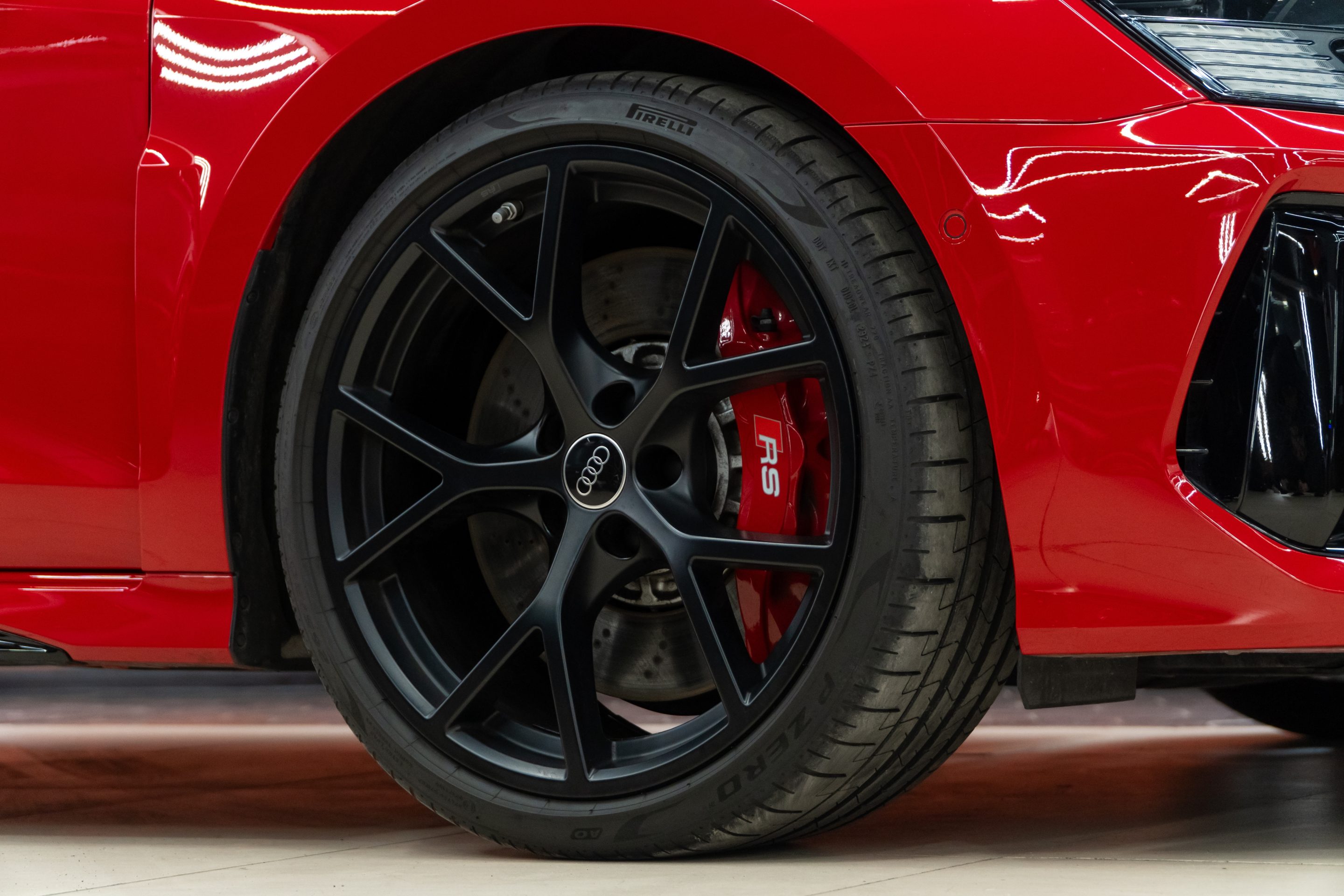
Disc brakes use callipers and brake pads to create the friction needed to slow the car
Every component in that chain wears a little with each journey, and when something in that system starts to change, the first sign can be a noise you can’t explain, a warning light you weren’t expecting, or a brake pedal that doesn’t feel the way it used to.
Modern hydraulic disc braking systems are highly engineered, but the principles behind how they work are easier to understand than many drivers expect. When you press the brake pedal, a brake booster amplifies the force from your foot before the master cylinder converts it into hydraulic pressure. Brake fluid transmits that pressure through brake lines to the callipers, which push the brake pads against spinning discs at each wheel. The friction between pad and disc slows the car down. Most modern cars are fitted with ABS, which helps prevent wheel lock-up during hard braking.
All of that happens in a split second, every time you brake.
This guide covers hydraulic disc braking systems, the type you’ll find on most modern passenger cars.
If you’ve ever asked, “How do disc brakes work?”, wondered, “how does ABS work?”, or wanted to know what a brake warning light is telling you, this covers how it all connects.
Brake Pedal to Brake Disc: How the Hydraulic System Transfers Force
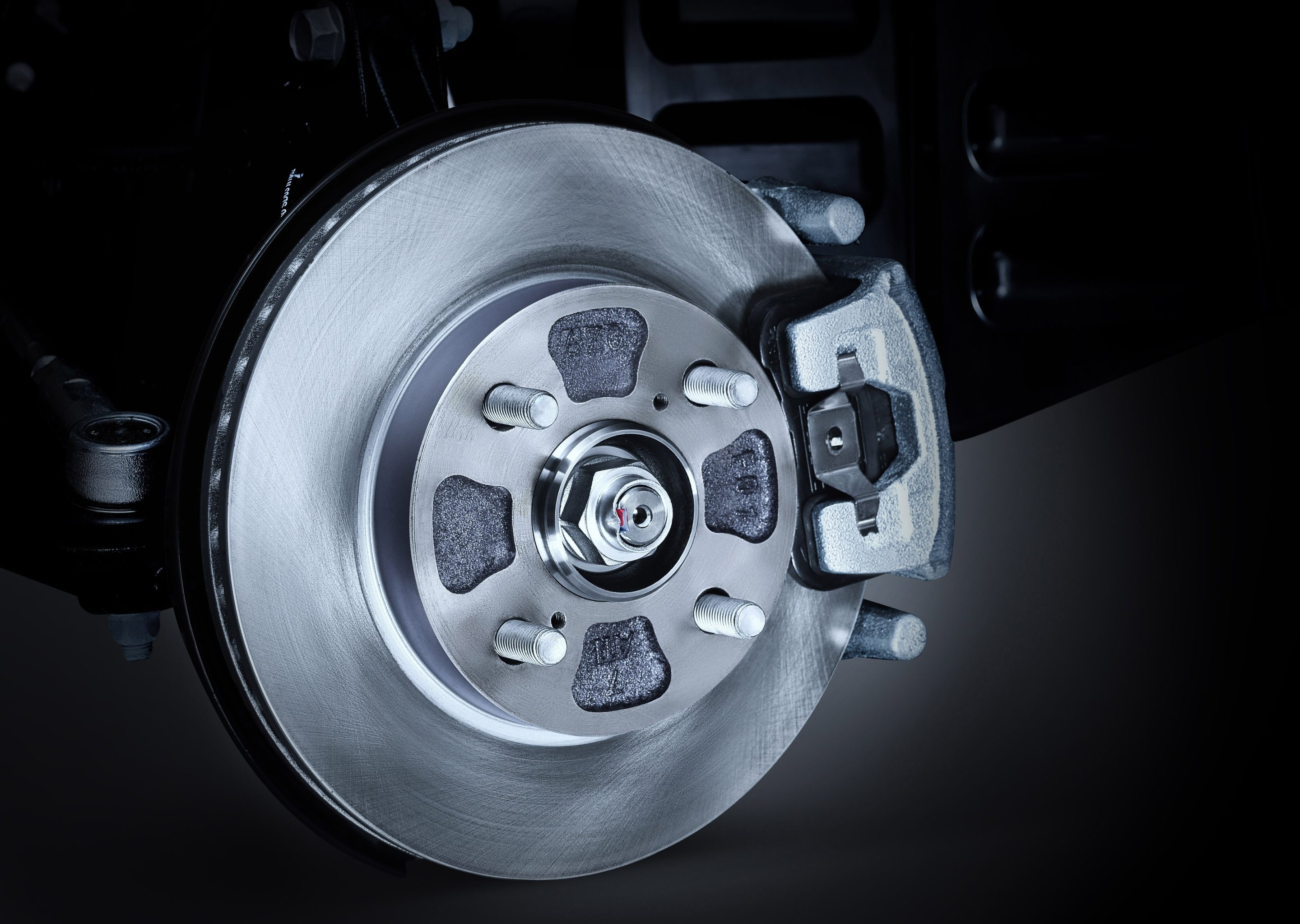
The calliper presses the brake pads against the spinning disc, creating the friction that slows the wheel
Most modern passenger cars use a hydraulic disc braking system. Each time you press the brake pedal, the system amplifies the force from your foot and distributes it to all four wheels through the same sequence:
- Brake pedal: Your foot pushes down, sending a connecting rod toward the brake booster.
- Brake booster (servo): Sitting between the pedal and the master cylinder, this unit multiplies the force your foot applies, so heavy leg pressure isn’t needed. Most cars run a vacuum-assisted booster; some newer models use an electric version.
- Master cylinder: Internal pistons convert the amplified force into hydraulic pressure, pressurising the brake fluid.
- Brake fluid: A specially formulated hydraulic fluid designed to carry pressure through the system with minimal compression.
- Brake lines and hoses: A combination of rigid metal pipes and flexible hoses that routes pressurised fluid from the master cylinder to each wheel.
- Brake callipers: Mounted over the brake disc at each wheel, these housings contain pistons that are pushed outward when pressurised fluid arrives.
- Brake pads: Friction components inside the calliper, manufactured from materials such as ceramic, semi-metallic, or organic compounds. They clamp firmly against the spinning disc.
- Brake discs: Most are cast-iron plates fixed to each wheel hub. As the pads press against them, friction is created and the wheel slows.
All eight steps unfold in the time your foot moves a few centimetres. That’s the car braking system explained at its most practical level.
Press harder, and the hydraulic pressure rises, clamping the pads more firmly to the disc. Lift your foot, and the pressure falls away. The pads release their grip, and the wheels spin freely once more.
Brake Discs: How They Work and Why They Wear
At each corner of your car, a brake disc is bolted to the wheel hub. Most are made from cast iron, and each time you brake, the pads press against them. The friction between the two is what slows you down. If you’ve ever wondered, “How do disc brakes work?”, that’s the heart of it: friction between pad and disc, repeated thousands of times over the life of the car.
Every braking event generates heat and friction, and over time, both take their toll on the disc surface. Some of the signs of disc wear that drivers may notice include:
- Surface scoring: Grooves or marks in the disc surface, which can develop from abrasive particles, corrosion, or uneven pad wear affecting the contact between pad and disc.
- Uneven wear: Areas of the disc wearing at different rates, which can sometimes cause a pulsing sensation through the brake pedal.
- Heat stress: Repeated heavy braking can cause uneven wear or heat-related distortion in the disc, which may lead to a judder through the pedal or steering wheel.
So what does this mean for your braking? A heavily worn or damaged disc can affect how consistently the brakes respond. The rate of wear depends on driving style, road conditions, stop-start traffic, and the type of brake materials fitted, amongst other things.
If you’ve noticed a vibration or pulsing sensation when you brake, the technicians at Fitch Autos, Brownhills can assess your disc condition and let you know whether they need attention.
Brake Pads: What They’re Made From and When They Need Replacing
Brake pads are the component that makes direct contact with the brake disc every time you brake. They’re often manufactured from composite friction materials, including ceramic, semi-metallic, and organic-based compounds, designed to press against the disc surface and create the friction that slows the car down. Over time, the friction material wears thinner, and eventually the pads need replacing.
Modern vehicles may use one or more built-in systems to indicate when pads are wearing low:
- Audible squealer strip: A small metal tab fitted to the brake pad. When the friction material wears down enough, this tab contacts the disc, producing a high-pitched metallic squeal.
- Electronic wear sensor: A sensor fitted to the brake pad that is activated once the pad wears beyond a set point, triggering a dashboard warning.
Not every car has both systems. Some rely on the audible indicator alone, while many premium models also use the electronic sensor.
So how do you know when to replace brake pads? From the driver’s seat, worn pads can feel and sound like:
- A scraping or grinding noise when braking, particularly at lower speeds.
- Reduced braking response, or a change in the way the brakes feel.
- A brake warning light appearing on the dashboard, though this can indicate other braking issues too.
Worn pads that aren’t replaced in time can damage the disc surface, potentially leading to more extensive and expensive brake work. The team at Fitch Autos, Brownhills can measure pad thickness and advise whether replacement is needed now, or whether there’s still usable friction material remaining.
How Brake Fluid Works and Why It Deteriorates Over Time
Without brake fluid, pressing the brake pedal would produce nothing. It’s the hydraulic medium that bridges the gap between your foot and the callipers at each wheel, carrying pressure from the master cylinder through a network of brake lines to where it’s needed.
Brake fluid has one property that works against it over time: it absorbs moisture from the air. The braking system is largely sealed, but trace amounts of moisture can still enter through seals, joints, and flexible hoses.
As moisture builds up, the fluid’s boiling point falls. Under sustained or heavy braking, if parts of the fluid reach boiling temperature, vapour bubbles can form in the hydraulic lines. Because vapour compresses under pressure where fluid does not, the brake pedal can start to feel soft or spongy, and stopping power can suffer.
That absorbed moisture can also encourage internal corrosion in callipers, brake lines, and other metal components over time.
Manufacturers recommend periodic brake fluid replacement for these reasons. How often depends on the vehicle and driving conditions, so checking your owner’s manual or speaking to a technician is a good starting point.
At Fitch Autos, Brownhills, our team can test your brake fluid condition and let you know whether a change is due.
Anti-lock Braking (ABS): How It Keeps You in Control
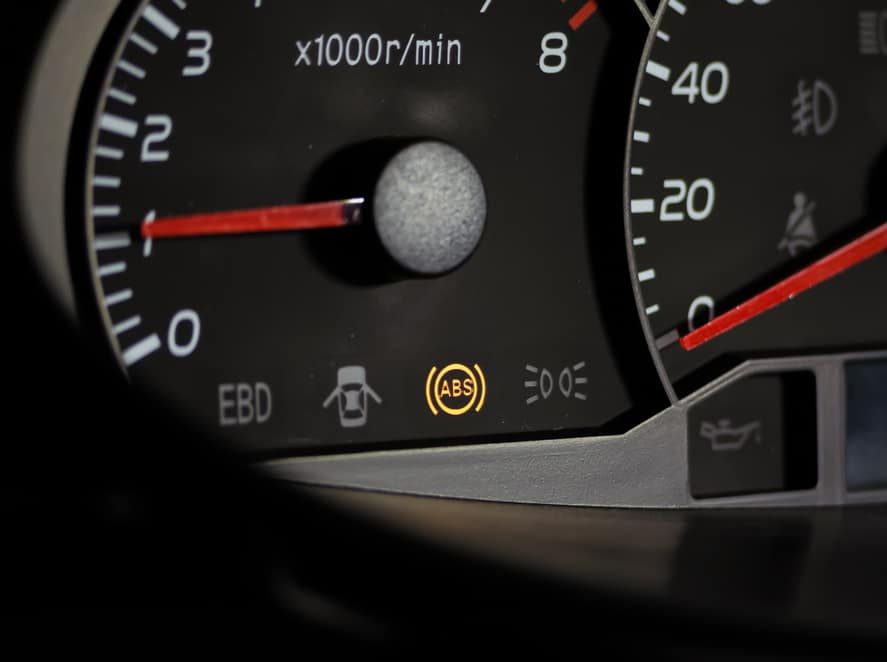
An ABS light that stays illuminated while driving can indicate a fault with the anti-lock braking system
ABS stands for Anti-lock Braking System, and it’s fitted to most modern passenger cars. If you’ve ever asked, “how does ABS work?”, it’s designed to prevent the wheels from locking during hard or emergency braking, which helps you maintain steering control when you need it most.
Without ABS, heavy braking can cause one or more wheels to lock, particularly on surfaces with reduced grip. Once a wheel locks, steering control drops significantly, which is the situation ABS is built to avoid.
The system uses speed sensors at each wheel. If it detects a wheel beginning to lose traction under braking, it responds in milliseconds:
- It detects that a wheel is decelerating so rapidly it may be about to lock.
- It reduces brake pressure to that wheel, just enough to let it begin turning again.
- It reapplies pressure almost immediately, repeating the cycle many times per second.
So what does ABS activation feel like from the driver’s seat? You’ll notice a rapid pulsing or vibrating sensation through the brake pedal, and you may hear a clicking or buzzing noise. Both are a normal part of the system doing exactly what it’s designed to do.
If the ABS warning light comes on and stays on during normal driving, that’s a different matter. It means the system has detected a fault, and it should be checked by a technician.
Brake Warning Lights: What Each One Means and When to Act
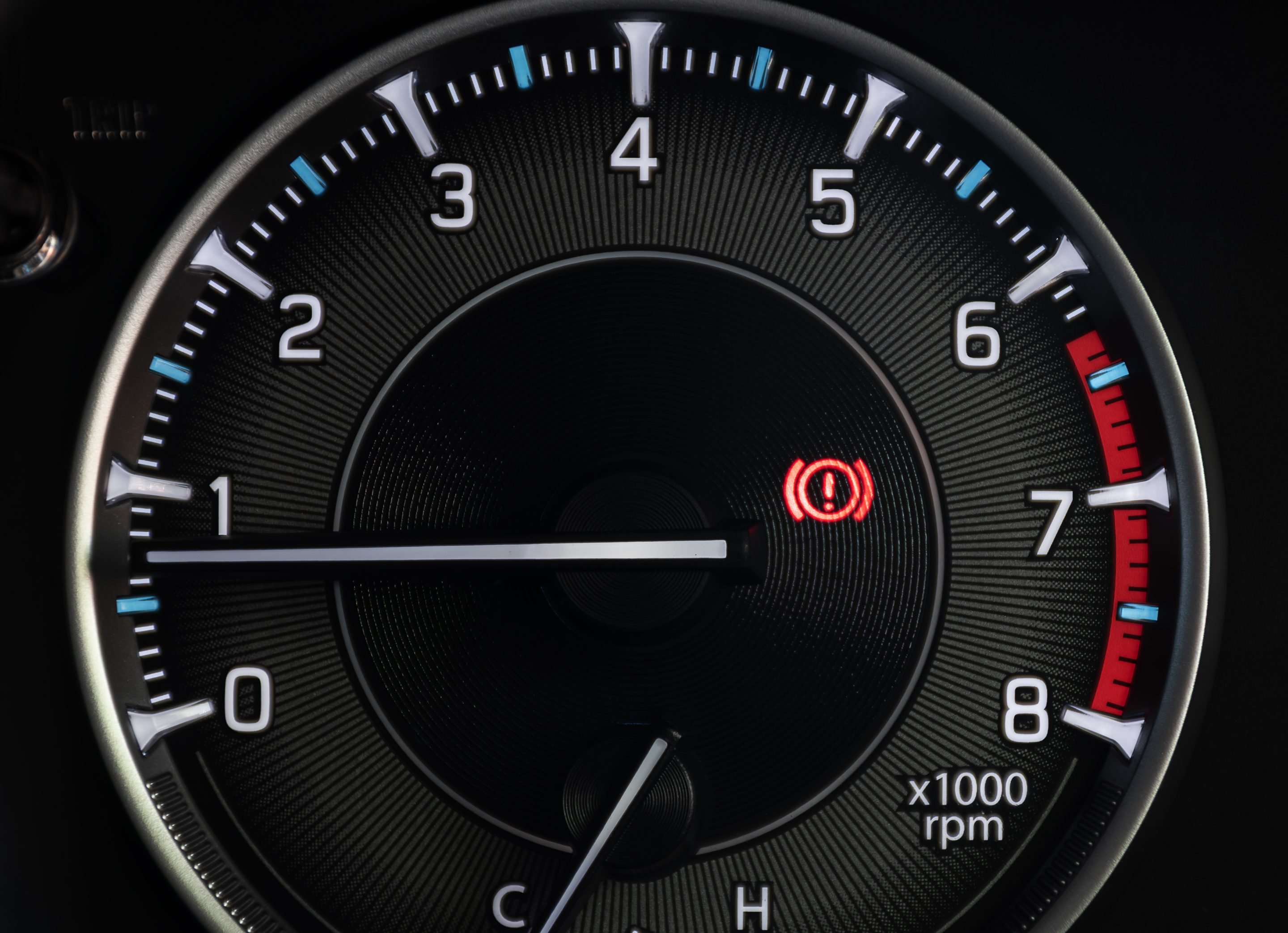
A brake warning light can indicate anything from an engaged parking brake to a fault that needs attention
Most cars have more than one brake-related warning light on the dashboard, and they don’t all point to the same issue. Knowing which one you’re seeing can help you understand how urgently it needs attention.
The three brake warnings you’re most likely to encounter are:
- Brake pad wear warning: On vehicles fitted with an electronic wear sensor, this light is triggered when the pads wear beyond a set threshold. You don’t need to pull over immediately, but it should be treated as a priority, and you should book it in as soon as you can.
- Handbrake or brake system warning: There are several reasons this light can appear. On some vehicles, it comes on when the parking brake is engaged. But it can also point to a braking system concern, including low brake fluid levels or a faulty sensor. If the light remains on once you’ve fully released the parking brake, it’s worth having it looked at promptly.
- ABS warning light: If this comes on and stays on during normal driving, it means the Anti-lock Braking System has detected a fault. Standard braking should still function, but the ABS safety feature may not be available. Have it looked at by a technician as soon as you can.
If a brake warning light appears while you’re driving and you aren’t sure what’s triggered it, drive cautiously, avoid heavy braking where you can, and follow your manufacturer’s guidance or contact a technician.
Whichever light you’re seeing, it’s worth getting it checked sooner rather than later. The team at Fitch Autos, Brownhills can pinpoint the cause and talk you through the right course of action.
Routine Brake Inspections: Why They’re Worth It
Brake wear builds up gradually. Pads lose friction material over time, brake fluid takes on moisture month by month, and disc surfaces bear the toll of heat and friction every time you drive.
A brake inspection during a full vehicle service covers pad thickness, brake disc condition, fluid quality, warning light status, and the condition of brake lines and hoses.
Your brakes sit at the centre of your car’s safety. Looking after them protects you, your passengers, and everyone sharing the road with you.
If it’s been a while since yours were last inspected, or if the pedal feel has changed, that’s reason enough to have them assessed. Knowing how car brakes work helps you recognise the early signs, but a professional inspection is how you catch wear before it becomes a problem.
Why Drivers Choose Fitch Autos, Brownhills for Brake Inspections, Servicing and Repairs
When it comes to how car brakes work and keeping them in good condition, you want to know the people looking after them have the experience and equipment to do a thorough job.
At Fitch Autos, Brownhills, our technicians bring hands-on experience and dealer-level equipment to every brake inspection, service, and repair. We cover a wide range of makes and models, work to manufacturer standards, and make sure you understand what we’ve found before any work goes ahead.
When you choose Fitch Autos, you benefit from:
- A 12-month parts and labour guarantee on all brake work.
- A free courtesy car while your vehicle is with us, so your day isn’t disrupted.
- Experienced technicians using dealer-level equipment across a wide range of makes and models.
- Clear, upfront communication, so you know what’s needed before we start.
Join {{review-count}} Brownhills drivers who’ve rated us {{average-rating}} on Google for honest communication and quality workmanship.
Whether it’s a noise, a brake warning light, or a brake pedal that feels different, Fitch Autos, Brownhills is here to help. Call us on 01543 452630 to arrange a brake inspection.
Call Now 01543 452630Save on Servicing
FAQ
How do car brakes work?
In most modern cars, the braking system is hydraulic. When you press the brake pedal, the braking-assist system amplifies the force, and the master cylinder converts it into hydraulic pressure. Brake fluid transmits that pressure through the brake lines to the callipers at each wheel. The callipers push the brake pads against the spinning brake discs, and it’s the friction between the two that slows the car down. Most modern cars are also fitted with ABS to help prevent wheel lock-up during hard braking.
How do I know when to replace brake pads?
Knowing when to replace brake pads comes down to a few key signs. You might hear a high-pitched metallic squeal when braking, which is the built-in wear indicator making contact with the disc. You may also notice that the brakes don’t feel as responsive as they used to. On vehicles fitted with electronic wear sensors, a brake warning light may appear on the dashboard. If any of these sound familiar, or if something else about your braking doesn’t feel right, it’s worth booking in with Fitch Autos, Brownhills for a brake assessment.
Why does my brake pedal feel soft or spongy?
A soft or spongy brake pedal can often point to several possible causes. One is brake fluid that has absorbed too much moisture over time, lowering its boiling point and allowing vapour bubbles to form within the hydraulic system under heavy braking. Because those bubbles compress under pressure, the pedal can lose its firmness. It can also be caused by air in the system, a hydraulic leak, or an issue with components such as the master cylinder. Any of these can reduce braking effectiveness, so if your pedal doesn’t feel the way it used to, it’s worth getting it looked at without delay. The team at Fitch Autos, Brownhills can test your brake fluid and assess the system.
What does it mean when the brake warning light comes on?
That depends on which brake warning light you’re seeing. A brake pad wear warning light is triggered when at least one set of pads is nearing its recommended replacement point. A red brake system warning may indicate low brake fluid, a parking brake issue, or another fault within the braking system. If you’re not sure which light is showing, the technicians at Fitch Autos can identify the cause and advise on what to do next.